Our goal is to develop TANNANA and the propulsion system that enables its flight. Our approach brings together the guidance of the Qur’an and Sunnah, learning from early Muslim scholars, and modern tools for analysis, simulation, design, manufacture and testing. Each experiment helps us identify the next step
The Qur’an and Sunnah guide our work
They guide us towards seeking knowledge, careful work, preparation, integrity and sustained effort with trust in Allah. These principles shape our daily choices in research and development
We work, consult and review our decisions, then move forward with trust in Allah
This commitment to knowledge and work leads us to earlier scholars: how did they understand the knowledge they inherited, and investigate questions that remained unanswered?
We learn from the approach of early Muslim scholars
We learn from how they studied earlier knowledge, examined its premises and connected an understanding of a problem with observation and experiment. Ibn al-Haytham inspires careful inquiry and scrutiny of findings; Abbas ibn Firnas inspires the effort to turn the idea of flight into a practical attempt
Begin by examining what exists and observing what is seen; advance step by step, scrutinising premises and treating conclusions carefully, guided by fairness rather than inclination
We read an idea in context, examining the question, tools and conditions behind the result
Analyse the problem
We study successes and difficulties, examining the assumptions and variables that may explain them
Choose what to test
We frame a specific question, propose a solution and define an experiment to assess it
This is how we study cycloidal propulsion: understanding earlier attempts and their conditions, then connecting what we learn to the questions we investigate in Humming Propulsion
We put that understanding to work with today’s tools for analysis, simulation, manufacture and measurement
We use today’s tools to develop and test a solution
We bring analysis, simulation, design, manufacture and testing into one working cycle. It begins with a clear problem and leads to a decision informed by measurement, then begins again
From our work: the single-stage unit
How do we connect calculation with physical behaviour? Follow the steps from that question to an experiment and a review of the model
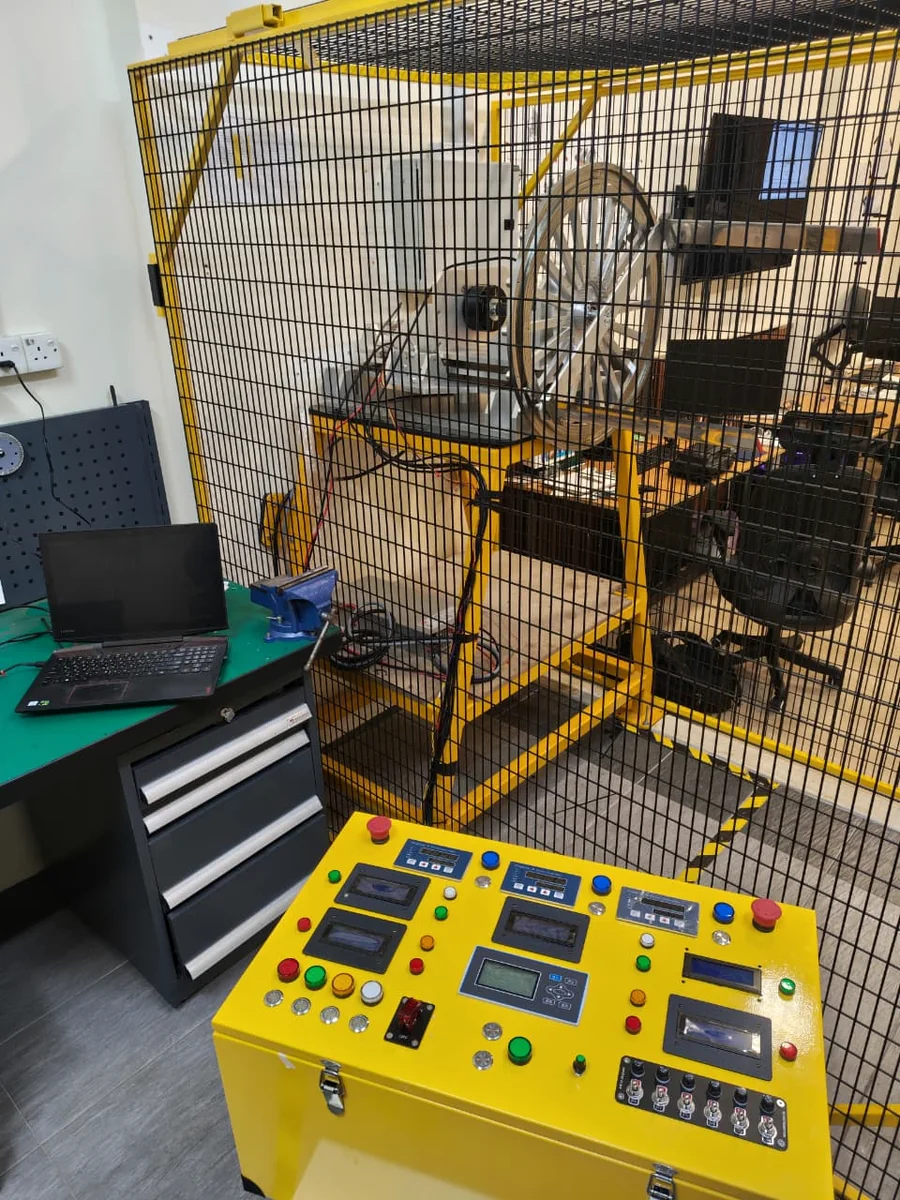
A test rig we developed to measure the unit’s behaviour. An actual photograph from the company archive
1QuestionA defined comparison question
How does the single-stage unit’s measured behaviour compare with our calculations? We define what to compare and the operating conditions needed for a useful comparison
2ReviewPrior knowledge to build on
We review earlier research and attempts, relating each result to its conditions and measurement method. This helps identify what the model should represent and what the experiment needs to clarify
3Analyse & simulatePredictions and test cases
We model the unit’s motion and interaction with air through calculation and simulation. We select operating cases and retain their settings and predictions for comparison with measurements
4DesignA design and measurement plan
We turn our understanding into a design that can be manufactured and assembled. We review loads, materials and measurement locations, and plan how each reading will address the original question
5Manufacture & buildA unit prepared for testing
We manufacture parts and assemble the unit, then check motion, alignment and connections and prepare the operating and measurement equipment. Observations during the build feed back into the design review
6Test & measureMeasurements with their conditions
We run the single-stage unit on the test rig and compare measurements with calculations under matching conditions. We record the conditions and operating observations needed to interpret differences
7Review & improveA development decision and a new question
We investigate differences between predictions and measurements, then review the model, design and test plan. The next cycle builds on that learning; multi-stage validation follows completion of assembly and control work
Every measurement feeds back into the model. Every review makes the next experiment more focused
Connected tools, from analysis to experiment
Each tool helps answer the question and contributes to the next. The team reviews this path and identifies what needs further investigation
In development
Research software
Choose what to investigate
We are developing a tool to prioritise possibilities and propose informative cases, from stage timing and blade angles to operating speeds. The team reviews the proposals and selects those to calculate and test
Receives
Variables, operating limits and results from earlier cases
Produces
Proposed study cases and experiment priorities
Selected cases move to the servers for simulation and comparison
Connected computation and data
Servers & data
Calculate and retain knowledge
We run calculations and retain their settings, then bring in measurement data to compare each experiment with its corresponding model. This connection lets us revisit a case and understand the effect of changing a variable
Receives
Unit geometry, operating settings and selected cases
Produces
Simulation results linked to their settings and a basis for comparison
Calculations help the team select measurement cases and prepare the test plan
Developed in-house
The test rig
Measure physical performance
We run the unit and measure thrust, power and operating behaviour. The rig has tested the single-stage configuration; multi-stage testing follows completion of assembly and control work
Receives
The experimental unit, operating plan and reference cases
Produces
Measurements linked to operating conditions and observations of unit behaviour
Measurements return to the server to refine the model and identify the next experiment
The team reviews proposals, operating limits and the experiment plan before testing. The software is a ground-based research tool, separate from safety-critical flight control
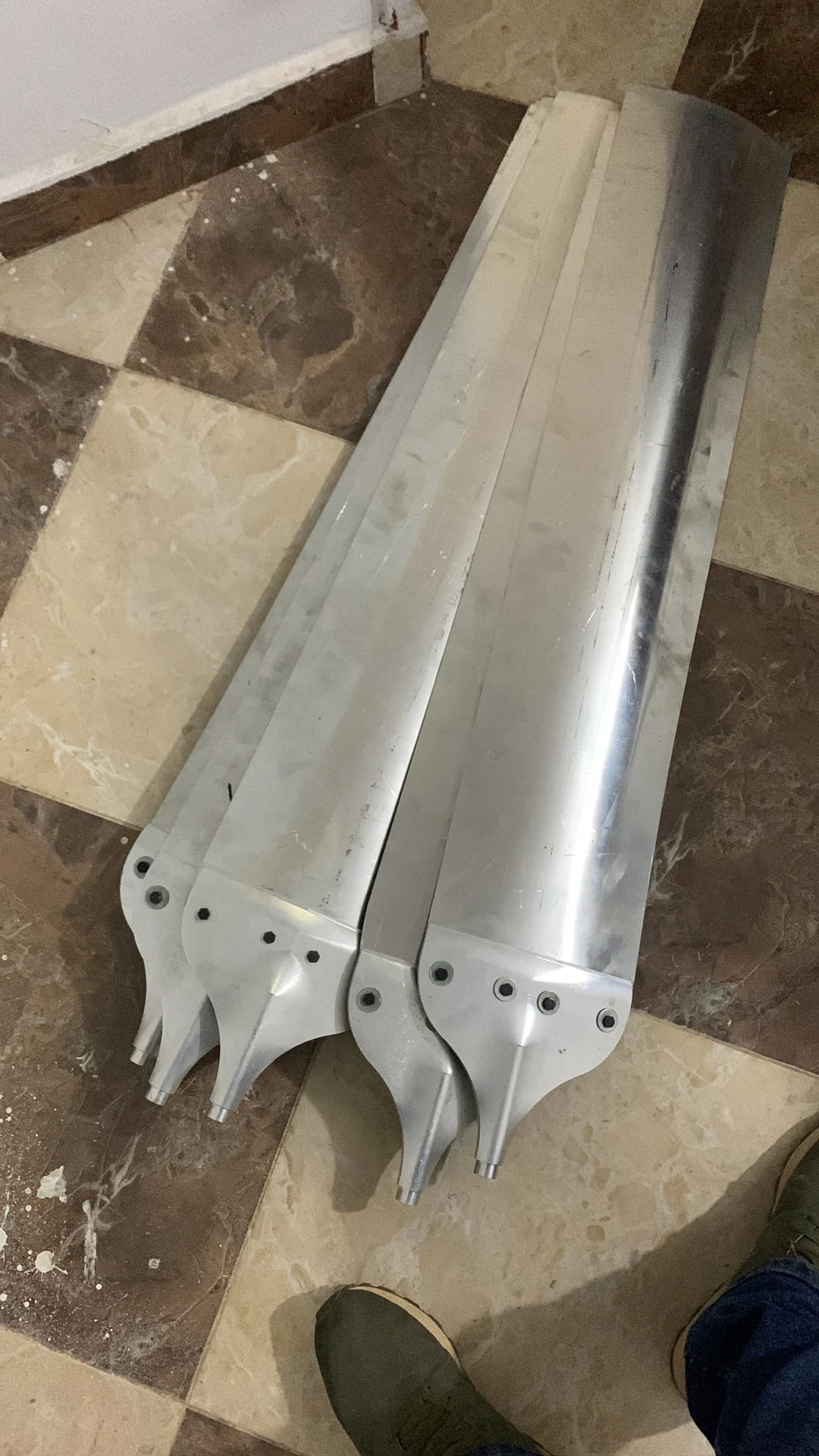
Blades before assembly, from the early prototype archive
Design for building, build for testing
Manufacture and assembly are part of understanding the problem. We review materials, loads, part accuracy and motion, and prepare the unit so the experiment can answer our question
When measuring, we compare matching operating cases and investigate differences between calculation and experiment. What we learn informs the model, design and next test
This connects our tools to our goal: a clearer understanding of the problem, a solution we can build and an experiment that helps us improve it
Every step moves us towards TANNANA
Progress between development stages depends on what we have learned, what testing has verified, and the team and resources available for the next step
1
From unit to flying platform
Do we understand the unit’s performance and behaviour?
We ground-test the multi-stage configuration and review thrust, power, loads and control response before integrating units into the demonstrator
2
From unit performance to system coordination
Do the units work together as required?
We progress through system and flight tests on an uncrewed platform to verify coordination, stability and control within defined operating limits
3
From platform to crewed TANNANA
Is the evidence in place for the next stage?
We review airframe, energy and control integration, failure analysis, the test plan and certification pathway, alongside the resources and expertise required for crewed development
We bring knowledge, experience and resources together around our goal, continuing to learn and work with trust in Allah. Meet the team that analyses, designs, builds and tests