

Humming Propulsion has roots in existing knowledge. Cycloidal propulsion was one of the foundations we studied and built upon: blades move around an axis while changing pitch during the cycle, enabling control of the resultant force direction. This article uses cycloidal propulsion in that specific sense
The value of this principle becomes clear when propulsion and steering are considered together. Directing force within a unit opens possibilities for vehicle configuration and coordinated movement. This creates a clear conceptual connection between that history and the starting point of HPS, which we acknowledge as part of our learning journey
The idea’s origins and development
Cycloidal propulsion spans more than a century of patents, experiments, and marine and aerial applications. These milestones bring together the history, images and references
- 1909 · Early patent
Gabriel Babillot: blades that feather during rotation
Babillot’s British patent GB190827771A was published on 21 December 1909 after filing on 21 December 1908. It described a blade-feathering mechanism for propulsion. Sverchkov’s separate attempt appeared in the same period and is shown in the next milestone
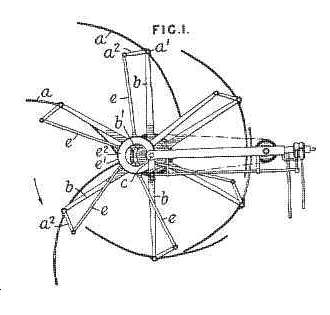
Figure 1 from Gabriel Babillot’s patent · Filed 1908, published 1909 · Historical drawing reproduced by Douglas Self The idea appears in the early patent record; a patent and an aircraft demonstration are distinct milestones
Source: GB190827771A · Patent record - 1909 · Early concepts
Sverchkov: the separate Samoljot attempt
Sverchkov’s Samoljot was an early attempt to use wings moving around a circular path. Its arrangement and operating principle differed from modern cycloidal rotors
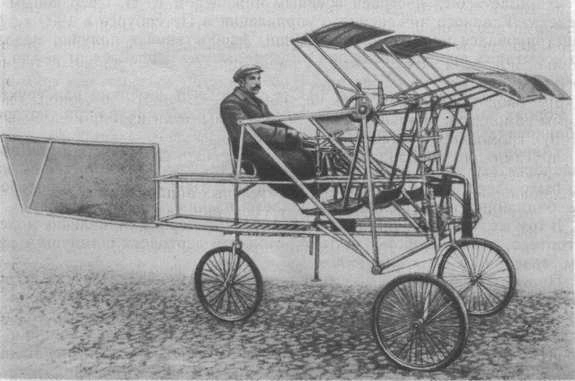
Samoljot, 1909 · Archival image reproduced in Benedict, University of Maryland, 2010 An early question: how can cyclic blade motion provide lift and propulsion?
Source: UMD · Appendix A - 1920s · Air & water
Kirsten–Boeing experiments
The idea moved into air and water test units. A 1926 NACA report documented marine trials and a proposed rotor installation for the Shenandoah airship
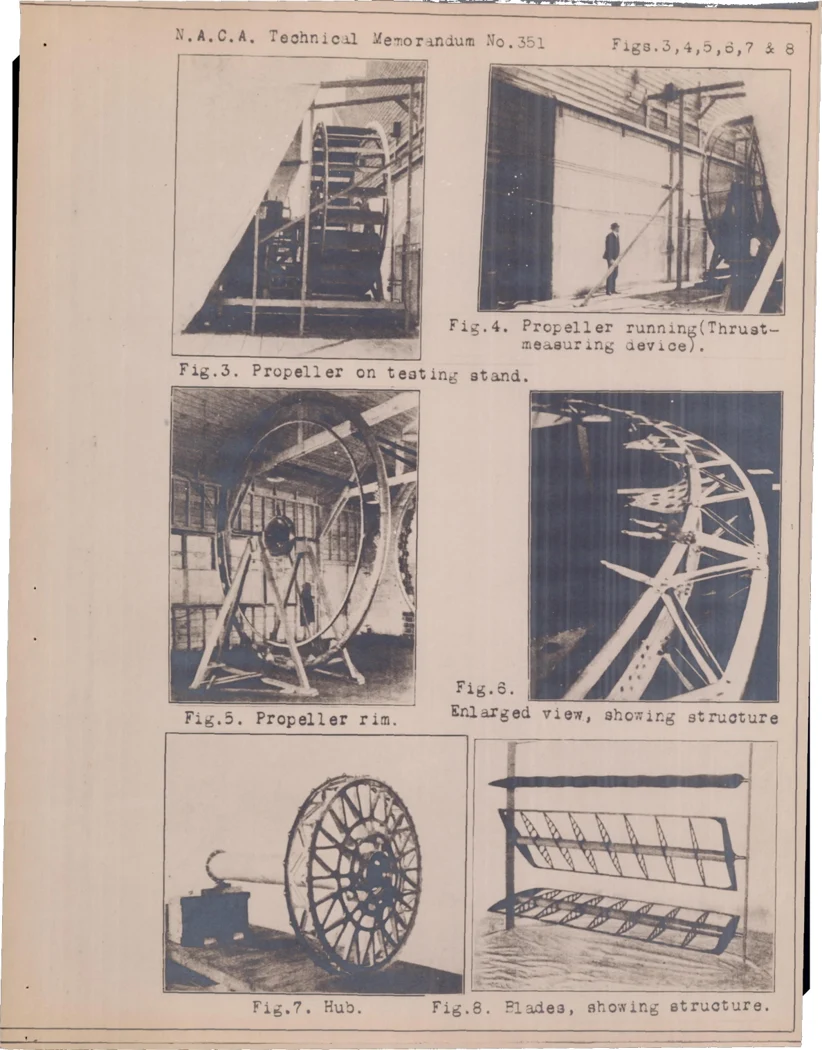
Kirsten–Boeing rotor and components · H. Sachse / NACA, 1926, via NASA The applications expanded, with mechanisms and loading still needing to suit each environment
Source: NASA / NACA - 1926 · Airship proposal
Vectorable propulsion for an airship
The report illustrated a proposed Kirsten–Boeing installation on Shenandoah. The installation was not carried out after the airship was lost
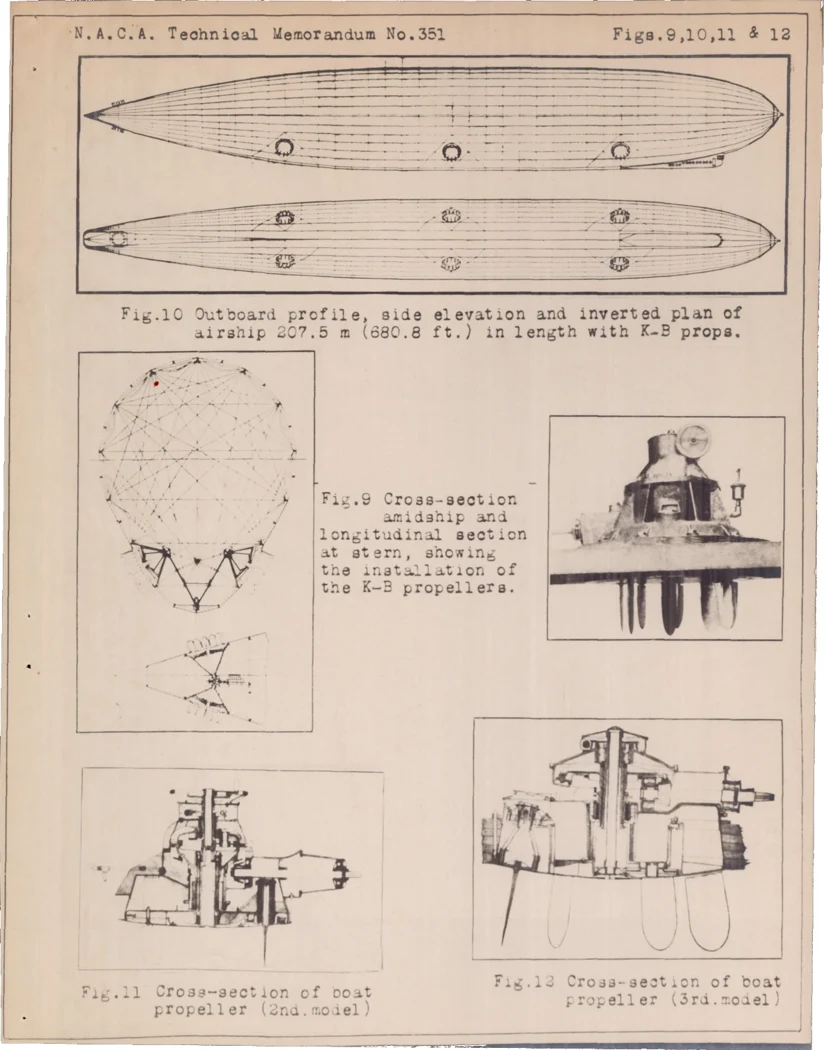
Proposed installation, not built hardware · H. Sachse / NACA, 1926 Steering from within the propulsion unit already featured in early air-transport proposals
Source: NASA / NACA - 1926–1928 · Marine application
Voith–Schneider: a marine application
Voith and Schneider progressed from model tests to an installation on Torqueo. Changing thrust direction within the unit became central to marine manoeuvring
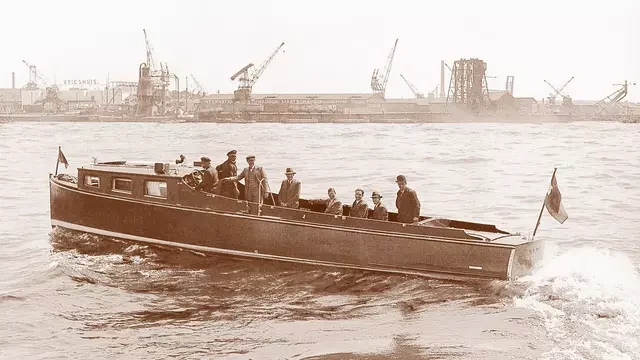
Experimental vessel Torqueo in Rotterdam · Voith archive, photograph date unspecified Water offered a practical path that developed into applications still used today
Source: Voith - 1930–1935 · Aircraft designs
Full aircraft designs explore the concept
Designs by Rohrbach, Platt and Rahn explored different rotating-wing configurations. They revealed design possibilities while practical flight remained an engineering challenge
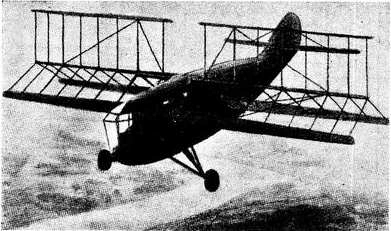
Rohrbach concept · Archival figure reproduced in Benedict, University of Maryland Combining lift and control within the rotor called for a better understanding of motion, flow and loads
Source: UMD · Appendix A - 1934–1935 · Wind-tunnel research
NACA investigates the rotor in a wind tunnel
A cyclogiro rotor was tested at Langley in 1934, with results published in 1935. The study examined lift, power and forward-flight performance
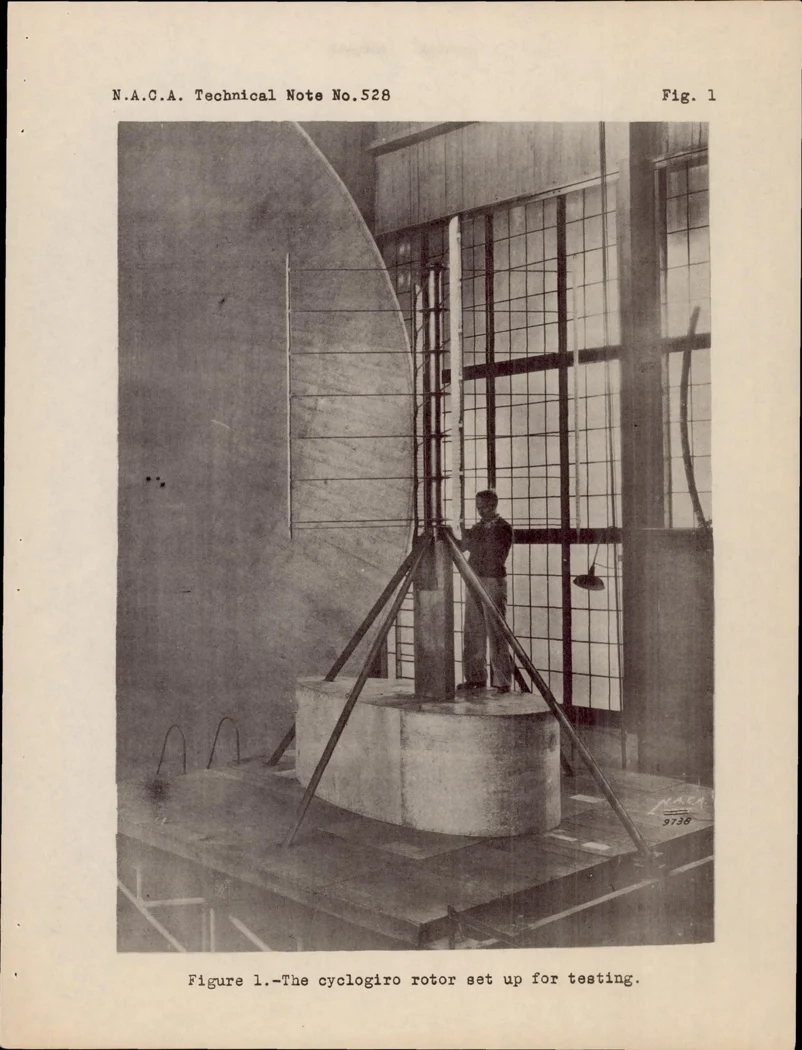
Rotor wind-tunnel rig · NACA TN 528, Figure 1, 1935 Connecting predictions with measurements became central to understanding and improving the system
Source: NACA / NASA - 2011–2017 · Research flight
Modern control enables small research aircraft
The University of Maryland reports stable flight of small cyclocopter vehicles beginning in 2011, followed by smaller models and multi-environment research
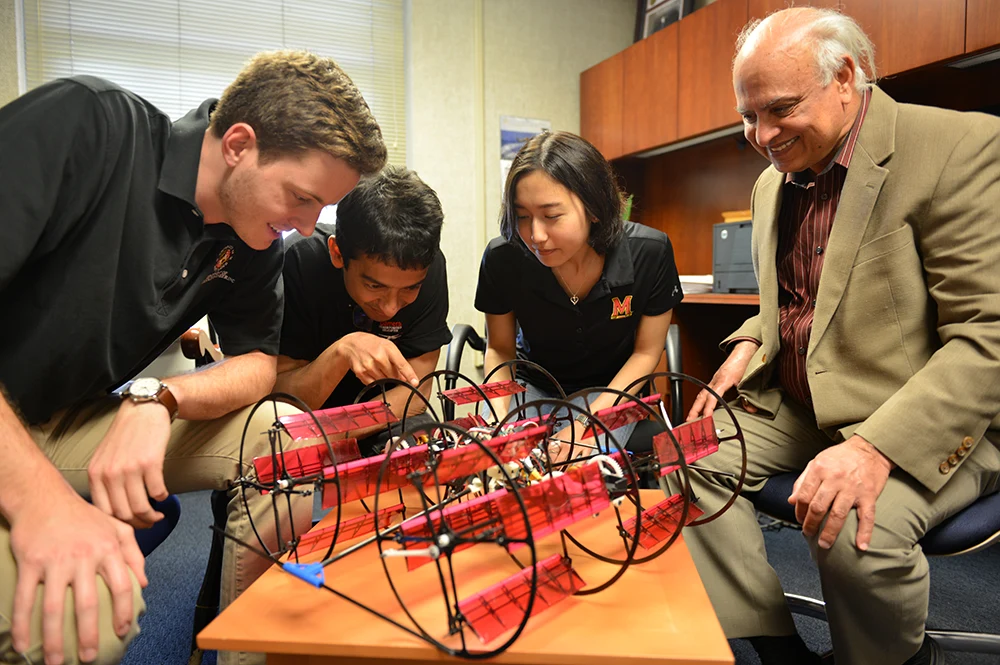
University of Maryland research, 2017 · Photo: Jennifer Figgins Rooks; not the 2011 flight Control, manufacturing and research tools came together in actual flight experiments
Source: University of Maryland - 2025 · Flight demonstrator
BlackBird enters flight testing
CycloTech reported BlackBird’s maiden flight on 27 March 2025: a 340 kg demonstrator with six CycloRotors. Another step in developing aircraft around this propulsion family
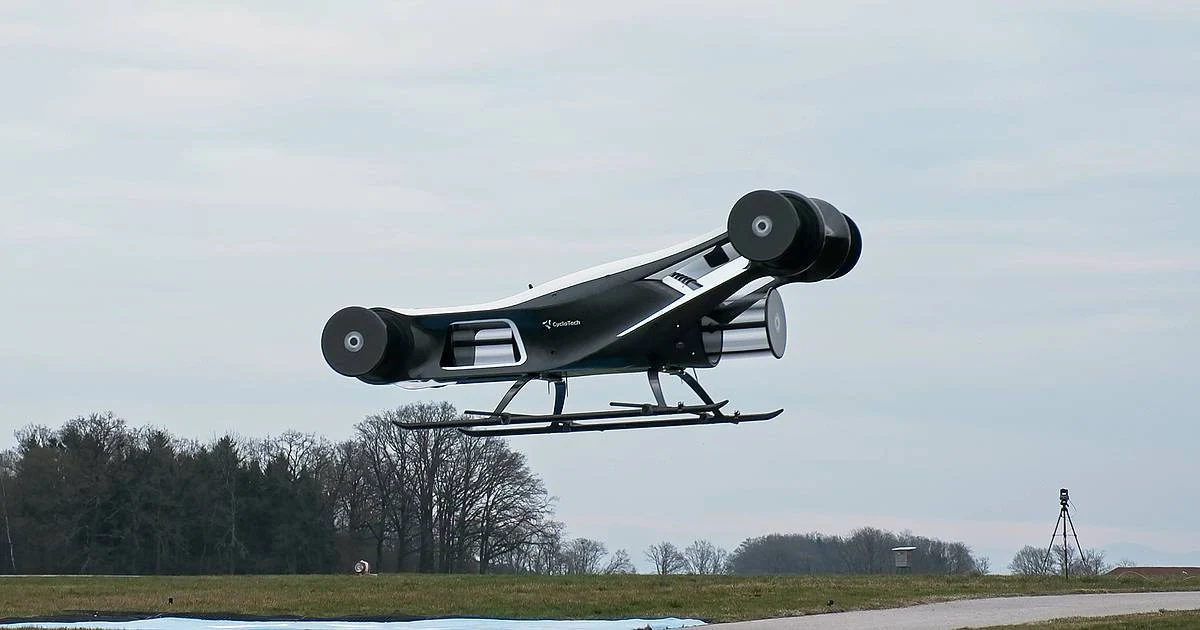
BlackBird in flight, 2025 · © CycloTech GmbH Vehicle-level work is advancing across different architectures and development programmes
Source: CycloTech
What does this history teach us?
This sequence shows different paths for the same principle: practical marine applications, aerial experiments facing questions of power, loads and control, and later flying research vehicles. Each milestone documents what was achieved under its own conditions and leaves questions for the next stage
A successful demonstrator opens a path for development. Reaching a certified crewed aircraft requires a separate programme of validation, safety and integration. This brings us to HPS’s place in that journey
From historical foundations to the Air Reactor
For HPS, this foundation offered a path to studying thrust direction, followed by our own questions about loads, motion control and integration. Our prototypes explored mechanical and electrical alternatives, with each experiment helping define the next generation’s requirements
We added a question about interaction between stages: how can a stage receive moving air and reorganise its momentum before it reaches the next? This defines the Air Reactor concept we are developing. The practical benefit of that interaction remains a matter for validation and measurement within our programme
This locates both the historical foundation and our work: an established principle for directing force, and our own development programme for unit configuration and internal interaction. The sixth generation brings together that experience, followed by ground and flight validation and the requirements for progressing to crewed flight
Sources and further reading
This content was reviewed and approved for publication by HPS Aviation. Detailed test data is available to qualified investors and partners under NDA
More from this author
 Can the Roadster go further?
 The hummingbird: a question about moving air
Article discussion
Start the discussion with a question or an idea.
Sign in to commentReport an abusive comment