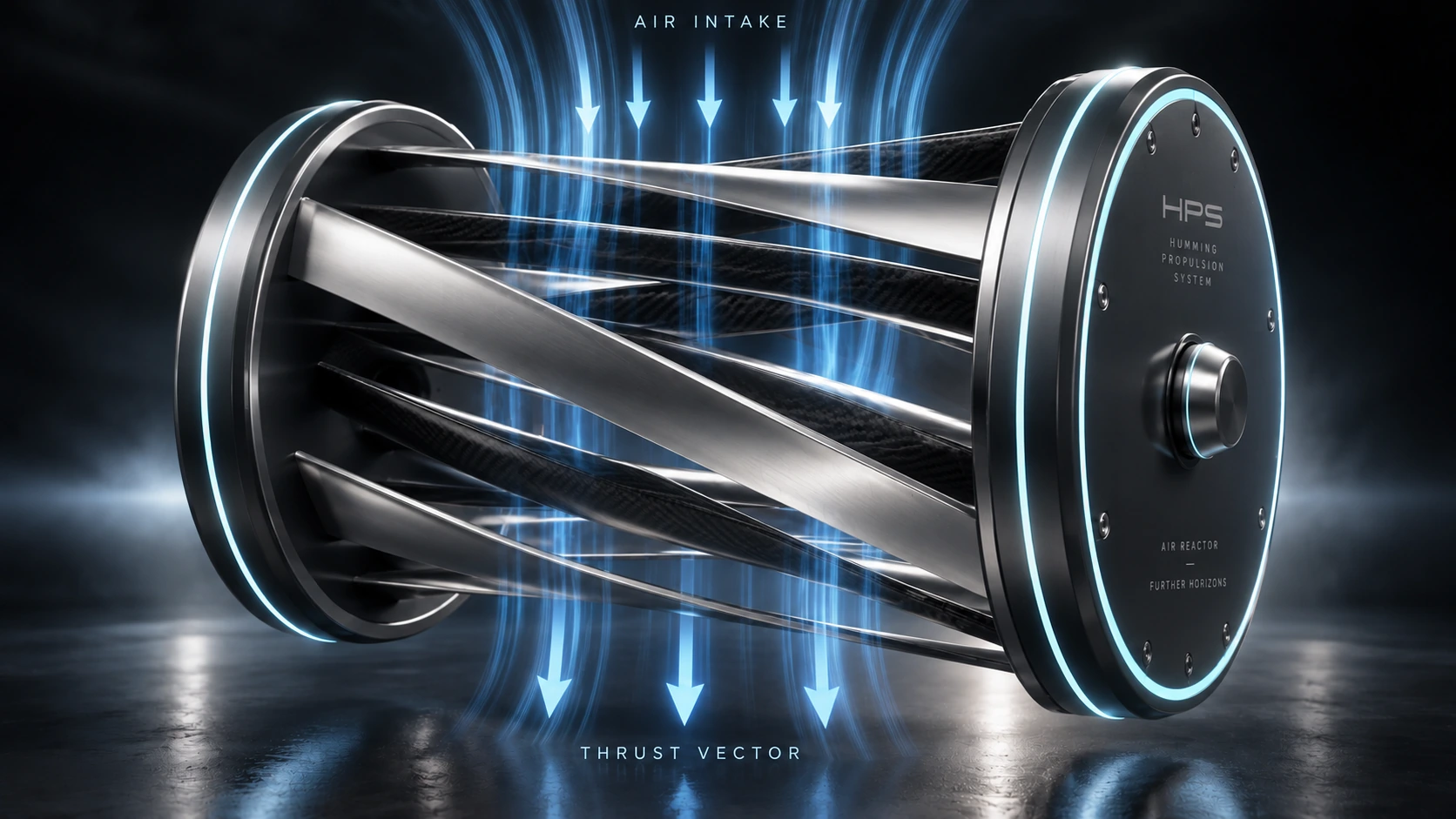
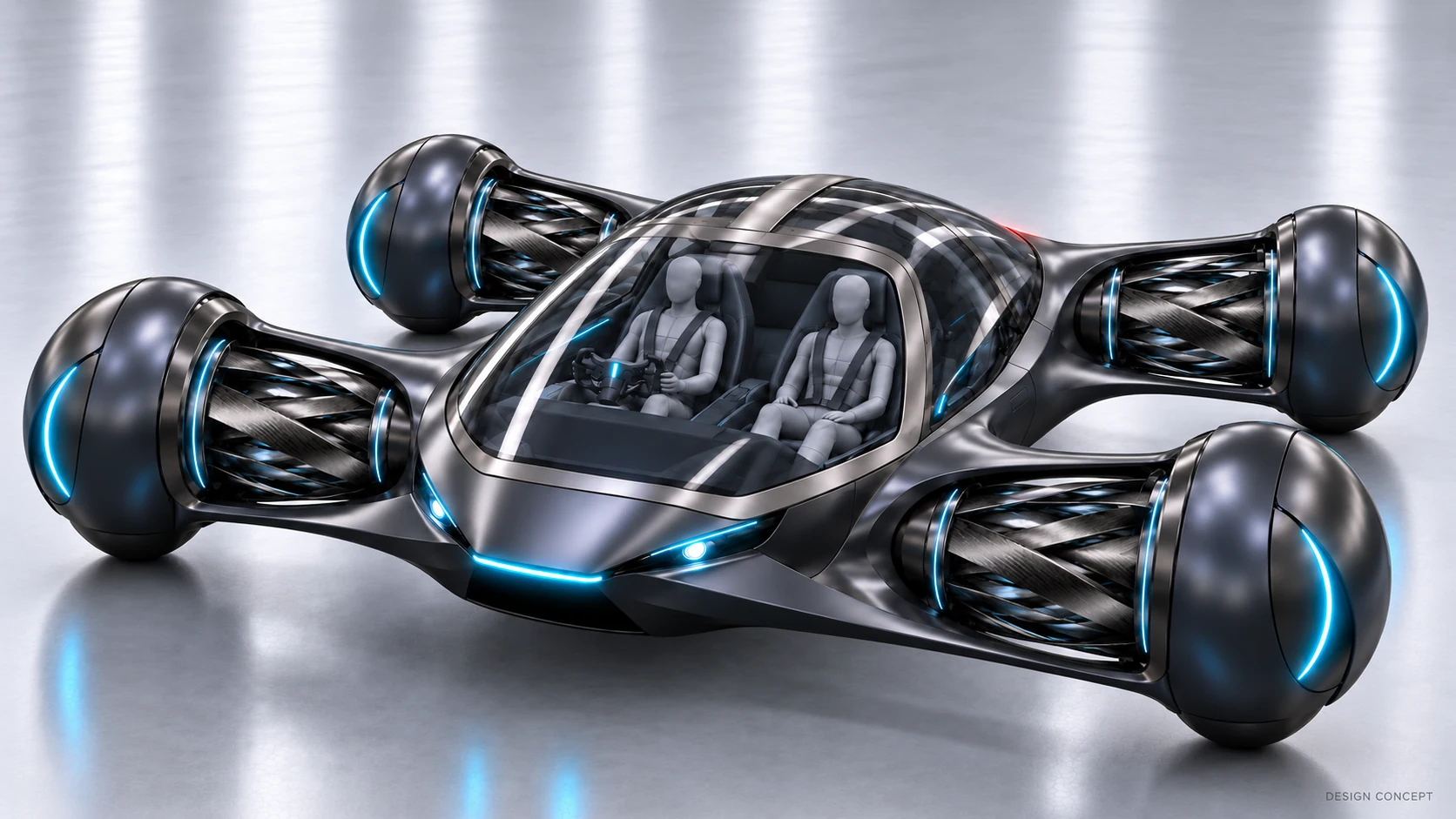
Humming Propulsion is an electric system being developed to combine propulsion, lift and control within one unit. Its concept manages airflow through connected stages and coordinates the resultant force to serve vehicle movement
The process begins by imparting momentum to air. The following stage receives a flow carrying motion, direction and vortices, interacting with it to reorganise it and add energy before it reaches the next stage. This interaction continues through to managing the flow as it leaves the unit
This is why we call it an Air Reactor: each stage influences the state received by the next. We work to coordinate that interaction to improve energy use and enable greater freedom in thrust direction. Electrical energy powers the process; simulation, experiments and measurement establish how far its objectives are achieved
Humming Propulsion System features
Thrust density
We target greater thrust relative to unit size, making better use of the space available within the system
This would let TANNANA accommodate lift and propulsion requirements within smaller units, giving vehicle designers more room to work
Flexible installation orientation
We develop the unit for different installation orientations and layouts, guided by each platform’s requirements and coordination between its propulsion units
This flexibility opens up different TANNANA families, shaped around their uses and space requirements
Target efficiency
We work to improve the conversion of electrical power into useful thrust and coordinate airflow interaction between system stages
Improved efficiency would make better use of available flight energy and offer more flexibility in balancing range, payload and energy requirements
Lower noise
Reducing acoustic impact is a core development goal, evaluated through measurements across operating conditions
Achieving this goal would support passenger comfort and reduce disturbance around TANNANA take-off and landing sites
Thrust direction control
We develop control of the resultant thrust within the unit, coordinating unit responses around the required vehicle movement
For TANNANA, we target precise manoeuvring, stable hovering and changes in movement direction while maintaining vehicle attitude
Multiple operating channels for safety
The system concept includes multiple operating channels within an architecture targeting coordinated control, power and fault response
This architecture supports functional continuity according to the fault and integrates with TANNANA’s safety systems; testing establishes the available response limits
Compact packaging
Propulsion, lift and control are brought into a compact unit, accounting for integration, clearance and maintenance requirements
This supports unit placement around TANNANA to serve airframe design, cabin layout and payload space
Fewer thrust-vectoring mechanisms
Directing force within the unit aims to reduce the need for external mechanisms that tilt the entire propulsion unit
This creates scope to simplify propulsion installation in TANNANA and reduce the surrounding mechanical-motion requirements
These features describe design directions and development goals. Their performance and implications for TANNANA are being evaluated through unit testing and vehicle integration
Why did we need to reinvent propulsion?
Challenges of the propeller-based alternative
Propeller-based propulsion has served aviation for more than a century, reaching a high level of design maturity. Our ambition for a more agile, compact vehicle brought us up against constraints rooted in its configuration and the physics of generating and directing thrust. Continued development mitigates these effects, while addressing them still involves trade-offs between size, energy, noise and control. We therefore started with TANNANA’s requirements to rethink the propulsion architecture itself
Thrust direction follows rotor orientation
In fixed-axis multirotor configurations, horizontal movement typically requires tilting the vehicle to direct part of the thrust towards the intended motion
A trade-off between size and power
Reducing rotor disk area while maintaining lift increases disk loading and generally raises induced power required in hover. Compact vehicles face a trade-off between space and energy
Noise from moving blades
Blade motion, loading and airflow interaction generate multiple sound sources. Design and operating choices can reduce them while balancing thrust and size requirements
Interacting wakes and vortices
Blades can encounter preceding vortices, while rotor flows interact with each other and the airframe. Under some operating conditions this increases noise and unsteady loads
Additional requirements for tilting units
Choosing to tilt propulsion units to change force direction introduces mechanisms, actuators, control requirements and maintenance needs into the vehicle configuration
Rotor space and safe clearance
Rotating blades require operating space, clearance and appropriate protection, particularly near the ground and people. These requirements shape unit placement, vehicle layout and operating sites
These constraints vary with vehicle configuration and operating conditions. They define the questions we work to address and validate in Humming Propulsion
Generations of development
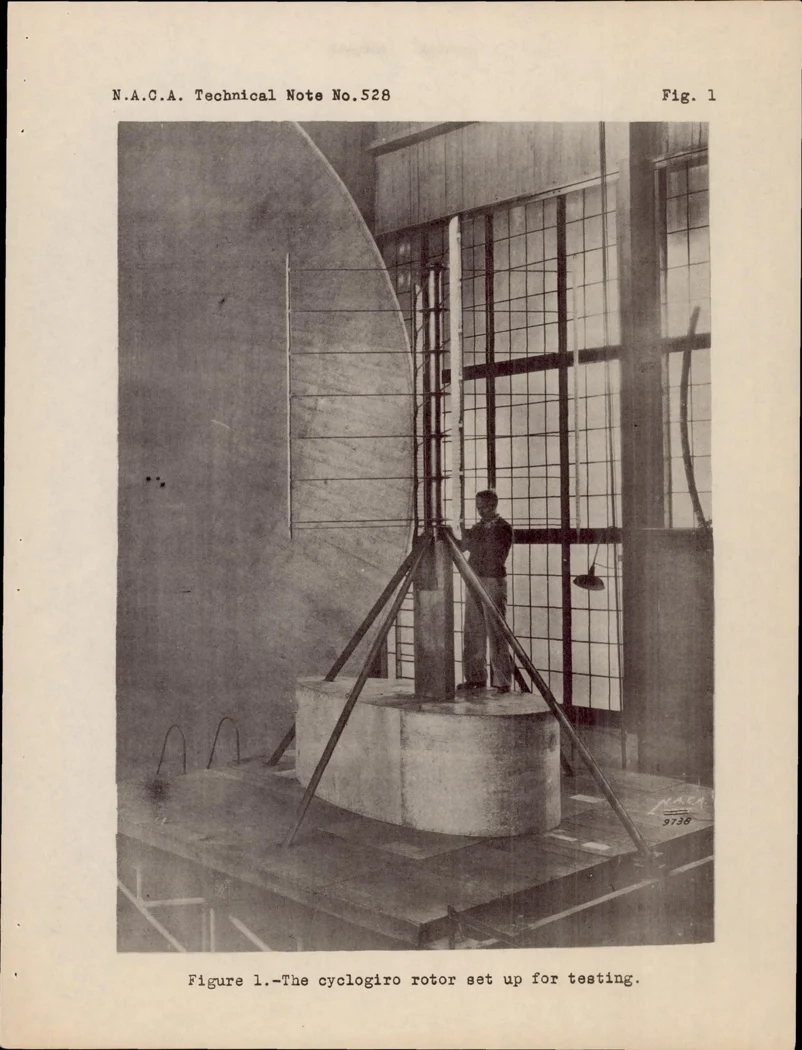
The research journey began more than eleven years ago and became its first physical generation in 2019. Each generation faced a challenge, and every experiment informed the next decision, leading to the product we are developing today
2019First physical generation
March 2026Generation-five single-stage rig test
Since June 2026Generation-six development
Detailed test data and technical results are available to qualified investors and partners in the data room under NDA
First generation2019
From idea to mechanism
We built the first mechanism and tested its motion and associated loads
We identified the motion and loading problems the design needed to address
Second generation2021
Choosing a development path
We tested an alternative mechanical mechanism against the preceding prototype
We selected a mechanical foundation for further development
Third generation2022
Exploring electrical actuation
We tried fast-response actuators to control motion, but their speed did not meet our requirements
We established the limits of this approach and the need for an alternative
Fourth generation2025
Testing an alternative and deciding
We tested another actuator type, which did not deliver the required result
We returned to mechanical control with a clearer understanding of the challenges to resolve
Fifth generationMarch 2026
Addressing loads and control
We brought load balancing and motion control into a unit that we tested physically
The single-stage configuration was tested on the rig, connecting calculation with experiment and establishing the basis for the next generation. Detailed data is available to qualified investors and partners under NDA
Sixth generationJune 2026–presentWe are here
Developing the integrated unit
We bring the experience of earlier generations into a more integrated unit. Parts manufacture, component procurement, controller programming and assembly preparation are underway
Parts manufacture
Component preparation
Control programming
Assembly preparation
Our next step: validate unit performance on the ground test rig
Development target2027
Complete ground validation
Test the integrated unit on the rig and measure its response, alongside early planning for the intended certification path with the UAE General Civil Aviation Authority
Development target2028
Integrate the uncrewed demonstrator
Integrate propulsion, control and energy systems into an uncrewed flying platform and prepare it for progressive validation
Development target2029
Uncrewed flight testing
Progressively validate coordination, stability, control and transitions between movement modes
Development target2030–2031
Crewed experimental prototype
Develop the experimental CROW prototype, complete its integration and carry out system-level ground verification
Development target2031–2032
Progressive crewed testing
Begin progressive crewed testing, subject to validation outcomes and regulatory approvals
Development target2032–2035
Certification testing and production readiness
Complete the testing programme required for certification and prepare for manufacturing and operation
Development target2035 onward
Target commercial operation
Begin commercial operation only after all required regulatory approvals have been obtained
Target certification path
The primary target certification authority for TANNANA CROW is the UAE General Civil Aviation Authority (GCAA). We intend to begin early certification-path planning in 2027 and structure the programme so it can later align with EASA and FAA requirements for relevant operating markets. This does not imply that a formal certification programme is currently under way
These are development targets, not confirmed operational dates. They depend on funding, test results, supply-chain readiness and certification requirements. Commercial operation can begin only after all necessary regulatory approvals have been obtained
From here, we could imagine TANNANA
Everything we have built into Humming Propulsion enabled us to imagine a different vehicle and begin designing it around the system’s capabilities. TANNANA carries that journey forward, beginning with CROW